Showing posts with label non-fiction. Show all posts

Thursday, June 21, 2018

Author Spotlight: Matt Leyshon


It has been a few weeks since I have done one of my author spotlights and this week I am pleased to introduce you all to ex-pat Matt Leyshon. Matt recently wrote an amazing book Jack the Ripper: Live and Uncut that he will tell us a little about in a moment, but first I must let you all know that the book is currently unavailable as he has some HUUUUUUUGE news coming soon about an update and a wider audience reach. So WATCH THIS SPACE! 

Tell us about yourself and your books!
I was born and raised in Sydney, Australia, in a suburb called Liverpool. I had always enjoyed writing from an early age but had never extended that passion to the level of a completed novel. 

I moved to the USA in 2004 and have been here since. I have lived in Florida the whole time, (Tampa now), and have a lovely wife and two gorgeous children. I often refer to them as “the greatest story I have”.

My one book at this point, Jack the Ripper: Live and UnCut, is a thriller. My books, (yes a series is being developed), tell of a concept of using time travel to solve cold cases. The book was written with both sides of the fence in mind. Jack the Ripper fans, even the hard core ones, will enjoy the level of historical detail and its accuracy, but it will also entertain readers that are new to the case. I basically wanted to write a decent Jack the Ripper tale but at its core is a fast paced thriller. A whole lot going on, both inside and outside of Whitechapel.

How long have you been writing, and how did you become involved in writing?
I guess the first time I wrote a story and received encouragement to tell stories was when I was six years old. My first grade teacher liked a story I wrote about someone who eats chicken sandwiches with ghosts in a haunted house. Writing has always been a passion I have harboured but never fully embraced. My efforts on this novel, and to become a proper author, are approaching the two and a half year mark, so I would say that is how long I have been writing.

The catalyst for committing to writing was an online tutorial I did called “Masterclass”, a website that has celebrities teach in their given specialty. Mine was conducted by James Patterson and the topic was thriller writing. It was very educational and it was also the kick up the ass that I needed. Another huge incentive was that Patterson was running a competition for his class members; submit a hook, synopsis and sample chapter for a potential novel. The winner got to write their book with James Patterson. I came up with three submissions, one of which was the book I wrote. So that was the original source of inspiration. I didn’t submit it however as it was something I really wanted for myself. The day I heard I did not win his competition was one of the happiest days of my life. I immediately began working on my book, “Jack the Ripper: Live and UnCut”.


What are you working on at the moment?
I am currently one hundred pages deep into the next Carl Axford adventure. It’s working title is “Cult Following: A Carl Axford Mystery”. I have 90% of the story outlined and am finalizing the plot and continuing my research. This book will suggest that several deaths of famous musicians, that were deemed accidental or unsolved, will be linked to a common cause. There is also a present day target. This will also see a lot of expansion on the original concepts in the first book and I am already taking them to new potential, which is always exciting as an author. There are also some sub plots that more or less play out over an arc in the series, so some subplots that were begun in the first instalment will see progress in the next.

I can also say I already broke my promise to write the book in proper sequence, and have written the last chapter of the book. I couldn’t help it. The inspiration came and I had to put it into words while the moment was there. What I can say is that anyone who reads Jack the Ripper: Live and UnCut is going to be grinning from ear to ear when they finish Cult Following.

I have also been thinking about writing a book that is autobiographical. My son was diagnosed on the Autism Spectrum at two and a half , and I wanted to document our journey from birth, to diagnosis, through to where we are today. The working title is Spectrumhood and I really want to tell our story, especially from a father’s perspective. The most valuable information we have been given is from people who walk in our shoes. I wanted to pay that forward. Mrs Leyshon wants me to continue with the Axford series though, so I’m working on that primarily, but Spectrumhood will see publication one day.

Did you have any goals with writing, and if so, how well do you feel you’ve achieved them?  What do you hope to achieve in the future?
As a first time author I think my goals would be consistent with others like me. Some of it is a balance of low expectations, combined with the pipedreams of being a NYT Best Seller.
When I wrote it I simply wanted a book that people would enjoy to read. I hadn’t expected any traction within the Ripper Community as I know how much they like to discuss books with facts and that Ripper fiction has not always represented the case, or Jack, well. As a first time author I had some doubts that my book would be liked but I was proud of what I had written.

The response has been truly overwhelming so far. While sales are nowhere near the “best seller” range, the critical reception has been off the charts. Across the Amazon sites I have nearly 30 reviews to date and only one of them was not a 5 star review. That reader still enjoyed the book. What was even more encouraging is that Ripper publication were unanimous with their praise. They didn’t just like it, they loved it! Naturally I was happy to update my cover and include some quotes from them on the back. I was also invited to appear on Rippercast as one of five authors to discuss Jack the Ripper fiction. My book had been out for less than a month when that invitation came. I have also appeared at Rippercon as a panellist to discuss Jack the Ripper in Fiction. The fact my book received such a warm welcome, to the point of embrace, is incredibly satisfying. For me, this is the demographic that is the most likely to criticize my work so I feel confident all readers will enjoy it.

Finding representation from a literary agent has been difficult as my decision to self-publish in order to solicit feedback has cost the book dearly. But, I am proud to say that I beat the self-published hex and have secured a literary agent. I am extremely happy and excited about moving forward with an agent on the next level. In order to do this I now have to remove the book from publication. A shame, as it had gained terrific traction, but this is what I wanted for the book so an action I have no problem following through with. I have appreciated all of the support and great feedback the book has received. It was a big part in peeking my agent’s interest.

How long does it take you to write a book?
From commencing first chapter, to completion of first draft, Live and UnCut took me sixteen months to write, but that did include a three month break. Being immersed in my research and story was something I would often describe as “going down a dark rabbit hole”. Some people love that rabbit hole, many live in it. I didn’t want that for myself nor may family. My wife and children went on a road trip in which I wrote 180 pages in 10 days. I love them dearly, but man…..I get so much done when I’m on my own!


What are the hardest parts of being an author for you?
Finding the time to do it for sure. My books involve a lot of research so getting the time to do it all is tough. I am a stickler for detail though and want therefore shoulder the burden of research with the realistic approach that its for a good cause. This also has to fit in with a life of being a software techie, father and husband.

What do you enjoy most about being an author?
When you complete the plot for a book and it all fits nicely. I outline my books so I know some chapters I will be looking forward to a lot as well, and obviously with Jack the Ripper you kind of know some things that are coming but I love the challenge of making it fresh and making the reader feel like they have been put right there. My book turns the creep factor up to eleven, the intention is to freak the reader out, not gross them out. On balance I don’t sugar coat what he did either.

One evening I wrote a chapter I had been eager to write for 6 months. I wrote through till 1:30am, but could not fall asleep until 5:00am due to being full of so much adrenaline. I thought, if my readers could feel a tenth of how I did, reading this material, then I would be happy. Subsequently I have heard that people who have read the book have had it keep them up some nights. I actually like that. I didn’t want the premise to set a scene that was gory, I wanted it to be eerie. Gory is disposable, creepy remains with you.

Do you have a spot where you like to write?
I write at a desk in my living room. Typically I just like to write where it is quiet and where I have a decent sized monitor. I finished the book while staying, alone, at a beach condo on the water. I could get used to that.

Besides writing, what do you love doing?
I love my kids and try to be a good dad for them as well as try to be a good husband. As for me I am a huge movie buff as well as a sports fanatic….at least for some sports. I miss the accessibility of some Australia sports as American tv doesn’t cover them with the same enthusiasm. I try to watch my beloved Wests Tigers whenever I can though.

What books or authors have had the most influence on you as an author?
I have several, and all for different reasons”

Martin Cruz Smith – Writes so beautifully and with great philosophy. His Arkady Renko novels are all masterpieces and he is so quotable with his description of places or people. Also the way he shows his main character evolves through his various stories but also how Russia changes along with him. He is literary God to me. I can easily pick up a Renko and read it.

James Patterson – James is the ultimate page turner. Usually when you read a Patterson you make short work of it, mostly because you don’t want to put his book down. One thing he said that I loved was when he tells a story he doesn’t want to hear somebody say “that’s great” he would rather hear somebody say “I’d like to read more”. That is Patterson in a nutshell and he is the master of stories that propel forward and at a quick pace.
Ben Elton – I love Elton as I have been a fan of his humour for decades. When he branched out from television and wrote novels I have enjoyed not only every story he writes but also his variety. He has written satires, murder-who dunnits, thrillers and always has great social commentary in every novel. He also has great humour in his books which is expected given what he gave to tv viewers.

Dan Brown – I love the Langdon series. What impresses me so much about Dan Brown, when I first read Angels and Demons, was that this book would make a terrific movie. I have felt that way about all of the Langdons. Needless to say I was very happy to hear that they were doing exactly that, and have done with three of them. When reading Brown you truly picture a scene playing out in your head. What I also like is Brown doesn’t dwell on getting to know the hero. Robert Langdon is a likeable hero but we don’t connect with him necessarily. We do become invested in his adventure though and want to see him succeed and it is through the journey that we learn little bits about Landon. I also appreciate that in those books it is Langdon’s talent that ultimately helps him progress through a mystery. The story is moved forward by what he knows and what he is good at. I like that a lot. I also like that Brown is not afraid of tackling a topic that knows will court controversy. He researches his books well, weaves history into a great story, but one that is ultimately fiction. Brown on his own admission concedes that these are stories……..not preachings to base a belief structure on.

Very honorable mentions are Edgar Allen Poe and William Shakespeare. Both capture the drama of horror or tragedy so profoundly. Their work has been the template for everybody that followed them.

What did you find most useful when you were learning to write and expanding your skills? 
Definitely the importance of having an outline, for me it was massive. There were some chapters that I didn’t get to write for months and I was relieved that I had placed a lot of relevant information in there and not have to research it again.

While writing the story I did develop other characters and device plots that were not in my outline, so I went back and added them in. An outline is a great tool, sometimes your best friend, but its completion should never signify the end of creativity for your story. It should be a balance of structure and spontaneity.

What are your thoughts about ebooks vs. print books?
Always preferred print books myself, but I can definitely relate to why people prefer eBooks. For personal reading I prefer paperback or hard covers, if I’m purchasing books for research I will predominantly go with eBooks mostly on the convenience of the delivery but also I usually buy a lot of books and it’s tough keeping them all on my desk.

What are your thoughts about self-publishing vs traditional publishing?
It’s down to the author. My preference is the traditional route, but the market is so saturated now it’s very hard to break through. As a first timer I wasn’t sure I had a decent book, so I opted to self-publish, in order to seek feedback (validation). Once I saw the reaction was great, especially from professionals in the industry, I sought to query agents. Sadly the phrase “self-published” pretty much condemns your book to instant rejection, at least in the US it does. Thankfully I found an agent that saw past that.

I see benefits of both. Self-publishing does offer you more freedom to promote it, it gives you creative license over the story, but it is all truly down to you. In spite of it all I do prefer the traditional route as I believe it is the route more likely to lead to being an author full time.

How often do you write, and how do you find or make time to write?
I try to put something in every day, whether it’s writing, research or outlining. How much time is subject to different factors, mostly when my kids are asleep. The majority of my book was written between 10:00pm and 2:00am.

Do you plan your whole book out in advance, or just let it flow? What does your writing process look like?
I outline most of it, especially if I have to include research notes, or develop plot lines or twists. Coming back to those months later is very handy. I normally establish “plot beads” which are chunks of the narrative or twists in plot, the major things. I then work on a way of threading them together. Cult Following will have a thread that involves multiple ciphers. I’m glad I locked the details of that away prior to writing it. When it comes to completing those chapters I’ll be golden.

What's a typical working day like for you? When and where do you write?
9:00 - 6:00 Work as a Solutions Architect
6:00 – 8:00 Have dinner, hang with the kids
10:00 – After insomniac daughter finally goes to sleep begin writing.

Do you ever get Writer’s Block? If so, how do you deal with it?
I did, once during Live and UnCut. I had hit one of the most critical parts of the book but realised I had a lot of research to do if I wanted to portray the next few chapters how I wold have wanted. The first chapter I had written in the book was chapter 37, which covered the Eddowes murder. So I picked up from there and wrote through to the end. I then had a 15 chapter gap to fill. Strangely, I didn’t fill the gap from chapter 22 through to 37, but went from 34-37, 31-34 and so on. Writing in the gap was like the movie Memento in a way.

Do you read your own reviews? If so, how do you deal with bad reviews?
Yes I do, because feedback is very important. If it’s positive feedback, you not only learn what you’ve done right but you also feel validated in the effort, research and risk you put into to producing the book. If it’s negative, you learn from that also in order to improve and put out a better product. You’re not going to make everybody happy but sometimes praise or criticism should definitely be noted. You have your own instincts but your readers voices should guide you a little as well.

Fortunately for me the story has received no bad reviews. I have received 5 stars, across the board, with the exception of one 3 star review from a reader, which was still complimentary. I did however receive criticism for the original cover. It seemed like a good idea at the time as I wanted something that got a reader’s attention but it was too confrontational and did not represent the story inside. The cover was doing the book a disservice and there was no lack of people willing to let me now. I owned all of it though and sought out a new cover that represented a mainstream thriller, still included Jack to a minor extent and show my main character’s purpose. I think the new cover got it right this time. 

The feedback is a lot more positive.

It was not my artist’s fault, he delivered what I had asked and in hindsight I did not make the best call there.

I guess this all leads to an answer of I do listen to both criticism and praise.

Other than reviews, do you hear from your readers? What kinds of things do they say?
Yes! I LOVE talking to my readers. A: I love hearing their feedback and discussing what they loved about the story. What plot twists they enjoyed the most. I also like to impart some stories behind the book. There are some cool research stories to be told along with some others that may give up spoilers.

I make myself completely available to readers and encourage them to reach out. Whether that is somebody who knew me before reading it and was surprised by what they read, or a sceptic who doesn’t like Ripper Fiction or time travel fiction but loved the book. A convert is my favourite reader as I know they did not approach the book with enthusiasm but came out on the other side a fan is terrific. I recently had somebody, I had never met, post on Facebook “Better be good, just purchased.” Later that first day they had added to their post that they had done nothing all morning except read my book. She is now a FB Friend, we talk regularly, and she recently described the book as her “favourite read of 2018”. As an author you have to love hearing that your work won somebody over like that.

The big thing for me is I want to hear why people came across the book and where that has progressed to. Some readers knew me personally, some love reading Jack the Ripper books. What I enjoy hearing after the book has been read is that they love the characters, the ideas, and that they will be back for more. They are saying they enjoyed your story and want to hear more. The sense of obligation is gone. I need to get Cult Following completed as there are a many readers wanting to see what happens next. Unfortunately, now that I am beginning along the traditional route, it will be difficult to gain any new readers/fans, but readers are now encouraged to lend their copy out to their family and friends.

What are some ways in which you promote your books?  What have you found most or least effective?
Various ways. I have done a couple of book signings in stores and intend to get that going again. I use Social Media but I am yet to see the influence it can be. It can translate to presence but not necessarily sales. Maybe that does come later, we’ll see. A good example is I ran a Facebook Promo and accidentally selected it to run on Instagram instead. I received nearly 2,000 likes for my picture but If there were sales from it I don’t think it would have been more than 2-3 books. I have a lot to learn in this area though and am trying to educate myself better.

I was invited on Rippercast, the main Jack the Ripper related podcast as a guest panellist to discuss Jack the Ripper Fiction. I was also invited to Rippercon, the Jack the Ripper Conference in the US. Again, I appeared as a panellist to discuss Jack the Ripper in fiction. I will also be appearing at a few more conventions, speaking on panels and trying to promote the book and myself further. My book has been nominated for several awards. Fingers crossed I do well in one or two of those as being an “award winner” suggests distinction from the pack.

I have created a website and am starting to channel everything through there. At first I didn’t have enough happening to create a decent amount of content. Now I think I do and with the website will also come a newsletter. The website also played a critical part in escalating intrigue from my agent.

How easy or hard do you think it is it to make a living as an author?
Speaking for myself, it’s hard. I think that would apply to any Indie Author. Attracting a reader base is one thing but another issue is that promoting your book comes at a cost most of the time. People charge ridiculous fees to simply review your book. A review should never cost more than the price of the book and the expense to ship it to them. Others charge money to promote it, critique it, proof-read it. If you want to enter your book into an awards contest, there is typically a fee, if you want it to progress through various channels you pay membership fees. For an Indie Author there are a lot of overheads. We’ll see what the future holds now that all of that is about to change.

What advice would you give to someone aspiring to be an author?
Do it! Being an author is all about wanting to tell the stories you have inside you and if you feel you have a story to share then get typing. The most important thing is if you believe in your story then believe in yourself.

What I will say as well is it’s a long road, with hard work. Very few authors strike jackpot with their first book and seeking representation is a battle you need to prepare for. If you want this, there are thousands, millions even, that feel it as well. You have to think about what makes you different, what makes your story better, and fight the good fight using that arsenal. If you wish to find an agent I have had many people tell me it’s a marathon, not a sprint, and that’s true. I ran the sprint and wished I had taken the path with greater resistance. Finding an agent takes time. Authors who find an agent in less than 30 rejections are the exception, not the rule. Many of the great authors were rejected many times. Even when you find an agent, they take the same fight you fought to publishers, so finding an agent is getting to first base, it’s not running into home plate.

For all the work and frustrations there is so much good stuff. Hearing from somebody that they loved your book is a beautiful thing. Being an author is like golf basically….there are a lot of times the shots don’t go your way and you become frustrated to the pointed you want to break a club in half. Then you have a couple of moments that make up for all of that. In the end you say to yourself, “maybe I’ll come back for another round”.

Tell us a random fact about yourself
Random eh…….ok. I eat price tags. I love eating price tags, and I love how they taste. A lot of new ones have holograms and other shit, but the old fashion peel away ones! Yeah….I love those. It’s a habit I never grew out of :)

 How can readers find out more about you: (Fb, Goodreads, website links and such)

Twitter:  @mleyshonauth
YouTube (Promotions Clips)
Trailer Clip - 
https://www.youtube.com/watch?v=DKtKNMu_J-U&t
Critical Reception Promo Clip 
https://www.youtube.com/watch?v=MaW9jEtdqIM&t

Saturday, January 14, 2017

Author Interview Jennifer Burge, author of The Devil Wears Clogs


Happy New year Everyone. I really hope you have had a great time away from the hustle and bustle. Had time to rejuvenate and get started on those new plans for 2017.

I am continuing with the hugely popular interviews of authors across the globe and this week I invited Jennifer Burge for an interview on Killing Time Blog.


Jennifer Burge understands the challenges of life abroad. Having documented the pitfalls of taking her career from the United States to Europe in her first memoir, The Devil Wears Clogs, it’s hard to imagine she would be confounded by the complexity of another foreign culture—yet that is exactly the case. Her understanding of Asian tradition is a mirage appearing and disappearing with each new interaction.

Moving to Singapore when the rigidity of European life began to wear on her seemed to be the perfect solution. A sophisticated modern condo in the heart of a developing nation was the answer to her prayers—or so she thought. The entrance of the Global Financial Crisis compounded the already-challenging international job search to an unprecedented level. Living in her fourth country without her professional status or a peer network leaves Jennifer to question her identity. Solo travel across Asia allows her to create an authentic one.

Can you tell us a bit about you as an author?
I’ve always had an interest in writing, but for years that took second place to my number one addiction which is traveling. In order to finance my aspirations of world travel, I worked as an IT project manager and consultant for nearly 20 years. Assignments during that time took me to ten different countries with me taking up residence in five of them.

In 2012, I made the leap from corporate rat-racer to full-time author because I wanted to write about what it truly means to have an overseas career. It is rarely as glamorous as it sounds and it is NOT for the faint of hearts.

During the past few years, I have become an active member of the Queensland Writer’s Centre and the Australian Society of Authors which helped enormously in understanding an industry in which I was a complete foreigner. The Devil Wears Clogs, about life in Europe, was first published in 2014 and Singapore Salvation, on life in Asia, entered the world in late 2015.

What are the hardest part of being an author?
Sitting down and doing the work! As I mentioned, I am travel-obsessed, which means I have an aversion to sitting still. A quick look at my blog is proof positive. Other than that, I think writing memoir is a very tricky business. You have to be careful writing about the people and events in your life while being honest—sometimes brutally honest—and that is far from easy.

What do you enjoy most about being an author
When I sit down to write about a particular event, the telling of it rarely goes as I expect. The story takes me where it wants me to go and I am honestly just the channel. It might sound odd, but there is a certain sort of magic that shows up when I am in the flow. It is a feeling that cannot be duplicated.

What authors/books have had an influence on your writing?
Joan Didion, Mary Karr, Jeanette Walls, Caitlin Moran—all excellent female memoirists & non-fiction authors.

Do you ever get Writer’s Block? If so, how do you deal with it? Do you believe there is such a thing?Only when writing about something that bores me. If I’m excited by the story, it doesn’t happen to me.

Do you have a particular place that you like to write? My home office in a bushy suburb north of Brisbane is perfect. I watch the birds and my own personal rain forest. It’s the first place I’ve ever had where I can truly sit and think with zero distraction and for me, I require silence. Others can write with music blaring, but I’m not one of those people.

Do you have a favourite time of day to write?Afternoons. In the mornings, my mind is simmering on something and by the afternoon, it’s ready to be served.

How do you like to reach your readers?
Social media, author talks, blogs, book tours---you name it, I do it. I think it’s the only way to truly discover what works for you. There is so much “advice” out there that you have to find your method in the madness.

Can you tell us about your latest book? 
Singapore Salvation is the second in a set of three books about work and life abroad. It is the sequel to The Devil Wears Clogs. In 2017, the final installment about life in Australia will be published.

How long did it take you to write the book?Singapore Salvation took two years to write. The Devil Wears Clogs, my first book, took six. On average, I am only ready to write about what has happened about seven years after it happens. That’s how long it takes me to gain enough perspective on these situations to make sense of my part of the equation.

Do you have a favourite character/topic in your work?

I call these books my ‘How NOT to Live Abroad’ guides as I basically share all the mistakes I’ve made in not understanding other cultures. When I left the United States for work in Germany in 2001, we didn’t have all this information about other nations and cultures at our fingertips as we do today. We still had analog internet! When I was looking for any sort of book that would tell me what my life and career would look like in another country, I was unable to find it. That’s why I’m writing these now.

What was your process? Did you plot out the entire book, or just let the storyline flow? Do you write in chronological order?
Luckily, digital cameras DID come into the world not long after I began my global misadventures, so I have an incredible archive of photos. As they are arranged by date, this helps provide the outline for the story as well as the basis for a lot of my setting description.

Once I have outlined, including the story arc, then I fill in the content.

Do you have plans for further instalments? The Python in My Driveway is my working title for the book about Australia that I am currently working on. For an American, a five foot snake in the driveway on a trip to the mailbox is far from a “normal” occurrence!

Do you have a plan for your next book? Too many to count!

Ebooks vs Physical books? Do you have a preference when reading?
I read both. When traveling I tend to read ebooks and at home I often read physical books.

Self-publishing vs traditional publishing? What are your thoughts? Do you feel that the industry is changing?I started with a publisher and switched to self-publishing. I have never worked harder, but I have never had more fun at work. I think you have to truly evaluate how much time you are willing to put into activities that aren’t writing/editing. If you don’t have an entrepreneurial spirit—do not self- publish.

And finally, what advice would you give to aspiring authors?

Don’t give up. If you love it, stick with it no matter what. If you don’t love it, this game probably isn’t for you.

If you'd like to know more about Jennifer's work, you can find her here:

Facebook:  https://www.facebook.com/worldwiseJen/ (author Page)
               https://www.facebook.com/SingaporeSalvation/ (book page)
               https://www.facebook.com/devilwearsclogs/ (book page)
Twitter: @jenniferburge
Instagram: @jen_burge 

Wednesday, November 2, 2016

The Author's Journey: Part 3: The Creative Process - The Trials and Tribulations

Welcome again to the third edition of The Author's Journey.

I am writing this as part of my Master of Arts (Writing) under the subject PWR70002 - Online Writing and I want to share with emerging writers as well as those who are keen to further their own writing.
I have already put out the request to my fellow authors for help once again creating some helpful advice, honest insights and tips and tricks for those who are on their own journey of writing. The comments and emails are coming through and I am finding that some of my peers have some incredible ideas that help them in their creative endeavours.

This week's topic was actually a suggestion by my lecturer who prompted me by saying, I needed to further examine the "complexity of creativity as part of the human condition." (Clover, 2016) And so that is where today's post goes. We have already looked at what inspires the writer, but now we must further investigate the trials and tribulations of the creative process. How we create, how we design and how we research the idea that inspired us.

We all have our own complex processes. Those things that help us work through a problem, or perhaps it is a point of reference that will always be a guiding light for our creative processes.  We can decide to travel to different countries or even different worlds, we can create new places, new processes, new ideas and even some authors have gone on to be the inspiration for inventors. Our creative process allows us to fly, to be free of constraint, we push boundaries and we make our characters suffer, in the name of our creative process.

Amy Wright, owner and author over at Murder Library and Serial Killer GPS app and the associated Facebook page which is incredibly informative explains her creative process...
Once I have an idea and start to put it on paper, I like to look at photos of the subject. I usually print them out or save them to a document, and start writing down words or phrases that come to mind when I'm looking at them. I often put the photos into a timeline, and write underneath. Eventually I can mix it all together to form my piece.
Musician and author Peter Altieri has a different approach to his creative process
For me, silence is golden. I get creative most times when I'm ready to write and the house is quiet. The next best thing is putting on headphones and listen to thunderstorm noise. With kids and grandkids, I've had to get creative over the years in many ways.
Charlotte Frisby  shares a similar approach to Peter, in preferring silence to create, both in mind and body.
Creativity comes often after the initial idea has formed in my mind, when I listen to a particular piece of music that 'fits' the story - always classical. Then sections of the story will flow in my mind. The house has to be empty and tidy - not sure why but if I have other things to do, that intrudes on the process and instead of figuring out how the character could be killed, the character drifts off to do housework or something equally odd. 

Authors are well known procrastinators. I cannot tell you how many times I have paired all the socks in the odd-sock basket, purely to avoid having to face the dreaded realisation that I have a void of ideas and I know that I should be writing.  I find the cleaning bug often strikes too when I have spare time and the opportunity to get in some extra writing time. We can find some extremely creative ways to avoid the fear of writing.  Of course these days we also have social media, for most of us it's a new way to avoid writing, and it can be extremely detrimental to the writing process, but sometimes the creative process can be so extremely enjoyable that nothing can get in our way when we are writing. It is those moments that makes it all truly worth it. Even looking through older status on my facebook I find some amazing comments that make me love the creative process of pulling ideas together.

 Tegan Barber another of my "serial killer" friends (in that she writes about serial killers, not that she is one)
My creativity comes to me from the real world and real people. I commonly find myself sitting in a public place like a cafe and writing down random bits of conversations I overhear or things I see that I like such as hair colour, tattoo ideas or building design.
Author David Russell goes a little deeper in his thought process on how he works through is early creative process,
Creativity is imagination, and the imagination is the creativity. The two go hand in hand.
For me, creativity isn't the process of putting the words down, it is what happens in the mind. After that comes the transition from mind to paper, the hard work. I visualise the things I want others to see, and describe those things as best I can. I'd like to think that more often not it works out okay.
Award winning author Rosanne Dingli explains
Inspiration means as little to me as "idea". Until either has been solidified into a good concept, with a solid premise, some tangible leads forward, and a proper understanding of what their whole might become, I trust neither ideas nor inspiration.
My life has shown me that idea-driven projects fail unless that ethereal inspired fragment has been taken and made real. Inspiration must be acted upon, and not only by putting the thought in writing. One must tackle the topic, see what others have done before, work on what emerges using analytical principles, and THEN one might have something worth developing.


A dear friend, author Karen Carlise has gone all out when responding to the question I posed. I think
it really highlights the pure joy of the creative process of an author and why we come back book after book, spending hour after lonely hour pulling together incredible ideas and amazing storylines.
Ah, research. Now you’re talking! This is the fun bit.
Once I have the seed of an idea, I need to let it grow. I try to immerse myself in the atmosphere, the mindset and the mechanics of the story. For me that is often nineteenth century, with a twist. But to know where to twist reality, and still keep the reader’s suspension of belief, requires a lot of background information.

First I gather up as many visuals as I can find (I’m a visual person: possibly the artist in me?): photos, maps and books written on my chosen theme/subject for a story. Fortunately, there are many virtual tours of historical buildings and ‘Victorian lifestyle’ documentaries available either online or on DVD. I sometimes make drawings of specific contraptions or characters...
For Doctor Jack, I read books and articles, and watched a slew of Jack the Ripper documentaries (including one with you, Amanda - you can watch it here). Currently I am reading Magic: stage illusions and scientific diversions, including trick photography (published in 1897) for the third book in my current series.

For the ‘smells and bells’, I do as many road trips as I can afford. I’ve done photoshoots in historic areas of Adelaide and, earlier this year, our local library did a bus tour of early historic buildings in the area; we were permitted to walk through some privately-owned buildings and discuss their history with the owners and local historian. I’ve even had a guided tour of ‘behind the walls’ at one of the Medici palaces in Florence. That will likely feature in another story that’s been bubbling away...
When I can’t physically experience something, I return to my default: do research... I’ve been fortunate to have experienced many things in my lifetime. I have friends who have done research or lecture in the most amazing (or obscure) subjects and are willing to share their experiences. This helps to germinate the seeds of my ideas. Then I just need to feed them with research and hope they grow.
So pushing further into this process, I want to share my own, explaining that first concept when inspiration has already struck and now the creative process begins, using my most recent true crime book, Rope: A History of the Hanged.  The concept and inspiration was the easy part, write a book on hangings, but then I needed to get creative, writing about a dozen or so people being hanged would be very very dull. So where did I take that?

WRITING NON-FICTION
Though I will go into research in a lot more depth later in the Author's journey, I will touch on it slightly here also. Having written many true crime books, I have some incredible resources to fall back on, working through piles of historical reading material I let the stories become part of my creative process. Finding themes, such as people that had been hanged wrongly, and wrongly hanged. Stories of escape. There was no writing just yet, just getting the ideas flowing, using some records as a basis of the book, and then searching through my own assumed knowledge that floats around my brain I was able to start bringing together some great ideas. I began with some very rough chapter headings, murders by hanging, suicides, escapes, the creative juices quickly began to flow as I recalled cases that would fit perfectly into the various chapter headings I had penciled in.

WRITING FICTION
Now I hear you now... "But Amanda, I am not writing a book on hangings, I am not even writing a non-fiction, so how does this help me?"  Recently someone asked how different is it writing in both fiction and non-fiction, and my response was that they are both challenging in their own ways. Non-fiction requires that massive amount of research and references and various amounts of checking and cross checking, with fiction you are free to write whatever you want and then get stuck when your muse is not talking to you. So whilst in non-fiction the 'story' is already there, it is restrictive, and in fiction it is non-restrictive, but you need to ramp up the imagination and creativity. This can be tricky. I often collate a pile of ideas and notes (see previous posts about inspiration and where to be begin) and then it's time to get creative.

Even when I am working in fiction, I put together a chapter list, a list of ideas, a brief explanation of what I want to happen and when, including the ending if I have it. Now it may begin as a list of 15-20 linked ideas, for instance various victims (I write thrillers so there is always a body count), a couple of red herrings, some personal events for the main characters, a few diverging issues that keep the story interesting. Often these little tantalizing ideas will get the creative process bubbling along. I work out how the killer become entwined with the story line, how they are caught. Of course it sounds a lot easier than it is in process. Often I will find massive gaps and need to work on that process. I talk to family, friends and readers about ideas, seeing how far I can push the boundaries. Still no story line detail is written, just working out that first creative journey.  If I am stuck or frustrated, I will often go for a run, often with my phone to my ear, talking through ideas with those who understand my process, bouncing ideas, asking advice. I need to find the skeleton (pardon the pun) of the story line before I can start.


Though I have mentioned earlier that writing in fiction is much freer than non-fiction, there is still plenty of research that can go into a story. I've freaked out my neighbours by conducting blood splatter experiments in my back yard. I've spent countless hours talking to serial killers, getting into their minds, learning the way they speak, it is those kinds of creative details that can make the stories more believable and in my case, (hopefully) far more chilling.

This is the joy of a writer when the process is working and working well. It can be just as exciting as the actual writing. I have marvelled at artifacts from history as I have travelled to different countries in search of research material, I have stood where many a criminal was hanged and felt the chills wash over me. A moment in time can inspire a hundred story lines if you get creative with your processes.

I know many of you are extremely keen to talk through what happens when the muse is mute and writer's block strikes. That will be another topic coming soon, so be sure to keep visiting for more.

WRITING TASK
Until next time, I leave you with a little writing task, something to get those creative juices flowing.  This was something I did earlier in my Master's degree and found the responses quite amazing. Write about a first in your life. First kiss, first tragedy, first fear, first bike, first friend, first book, first loss... Make it something that is outside of your comfort zone and also write outside your genre... if you write humour, write something tragic, if you write romance, write something horror. Go to the opposite end of your scale and see what you can create!

HAPPY WRITING


Cheers,

Amanda Howard

If you'd like to be involved in this blog, be interviewed about your latest book or if you have a story to tell. Please contact me via the links below.

Links:
Amanda Howard Facebook: https://www.facebook.com/amandahowardauthor/
Amanda Howard Twitter: https://twitter.com/amandahoward73
Amanda Howard's books (Amazon): https://www.amazon.com/Amanda-Howard/e/B001JP7X7I/

Thursday, September 29, 2016

The Author's Journey - Part 1 The Seed of Inspiration

Welcome back to the very first part of my blog series, The Author's Journey. I am writing this as part of my Master of Arts (Writing) under the subject PWR70002 - Online Writing.

Each week, I will post a new blog topic, covering a small part of the author's journey, using my own experiences, my own mistakes, learned skills, and creative processes to help emerging writers find their writerly self and create their own masterpieces. I will also suggest a writing exercise to get those creative juices flowing.

This week, I will look at the seed of inspiration. That moment when you come up with an idea and what you need to do with that to nurture it and help it sprout. Of course it would be easy just to give you some points, some tips and then just assume it will work for you, but that is not how I work.  I want you to come along a journey with me. I want to inspire you to create your own journey.

As an author, I love to listen to people, I love to hear their ideas. So many of my story ideas come from something someone has said, or perhaps a news article, even a story I read that I thought could have gone in another direction. Inspiration is all around us, it is about finding it.

So how do we find it?

THE SEED OF INSPIRATION
In its simplest form, inspiration is everywhere. The seed of an idea could come from anywhere at any time and this is why you need to always have a notepad and pen, or some other form of implement that will allow you to write down or record your ideas.

Personally I carry a small A6 size note book and pen in my bag, I prefer to jot down ideas but don't forget you can also send yourself messages on your phone, via email or even in a recorded message, however my advice is always to ensure that you keep all of your ideas in the one place. Keeping those pieces of inspiration together means that if you do get stuck, you can flick through a notebook or folder with ease - rather than scrolling through emails/recorded messages etc. Being unorganised with your ideas is just as bad as not writing them down!

So where to find inspiration if you're not sure you have anything to write?

Always remember that EVERYTHING around you is fodder for writing. Yes EVERYTHING.

Sitting in a coffee shop, listening to the conversations going on around you could be the opening scene of your next book.

The two toddlers squabbling over a favourite toy at the park? Perhaps those two little girls later squabble over the running of a multinational corporation in your book.

I was once sitting at my daughter's swimming carnival watching the kids race laps in the pool when an idea came to me. A story questioning how well we know our neighbours. What inspired that? It was my daughter's friends sharing their stories, of the mum who gets up at 3am each day to cook lunches for her children, the other child who was excited to be meeting her father on the weekend. It made me think, how well do we know people and how many secrets do people really have?

Luckily, though I was prepared for a day of water and chlorine, I had also packed a notebook and pen. By the end of the carnival, between cheering for my daughter's sporting house I had jotted out the entire book's premise.

Another moment of inspiration came for me under somewhat tragic circumstances. I was in Sydney, doing the touristy things that people are wont to do, when we came upon a man who was suffering from some mental health issues. I was completely fascinated by his thought processes and his speech patterns. He half sang-half ranted about God and about an imaginary friend beside him. What he said stuck with me, and later became part of one of my storylines. Using examples from life gives realness to stories. People are fascinating and I never miss an opportunity to learn about different types of personalities - especially if they are fractured or flawed.

So, now, I recommend to have a go at an exercise, to find your own inspiration.

WRITING EXERCISE
Forget about any project that you are procrastinating on. Forget those other ideas and scribbled notes. I want you to go somewhere different to your usual places of comfort. Head to a sporting event, take a walk along the beach, find a high spot on a large grassy hill and write what you see, write what you hear, write what you feel.

I'd love to see how you go with a fresh piece of a paper and an new place of inspiration.

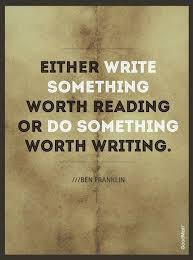
To end this week's blog post, I will use one of my favourite quotes: "Either write something worth reading or do something worth writing" Benjamin Franklin.

Thanks again for dropping by, I hope to put these topics up frequently, so I can share my journey with you and hopefully inspire in you an incredible manuscript.

Until next time,


Cheers


Amanda Howard


Links:
Amanda Howard Facebook: https://www.facebook.com/amandahowardauthor/
Amanda Howard Twitter: https://twitter.com/amandahoward73
Amanda Howard's books (Amazon): https://www.amazon.com/Amanda-Howard/e/B001JP7X7I/

Saturday, September 24, 2016

Author Interview: Award Winning Belinda Missen


Welcome to Belinda Missen, this week's feature author.

Belinda Missen began her writing career following a decade in retail and a further five years in the transport industry, Like most of us, she realised where her heart belonged and she decided to take a break and return to her first love, writing.

After her works were read by approximately fifty thousand online readers, she finally decided to put the figurative pen to paper and write her first novel. While she enjoys writing contemporary romance fiction, she can also be found freelancing for websites, and twisting dark, psychological thrillers together.

In April, 2016, Belinda won the Inspire 26+ Category in the Australia-wide JOLT Courthouse Youth Arts Awards for her short piece "Obsessions".

She's currently working on novels four, five and six. So, if you're looking for her, she's likely buried under a pile of paper somewhere. Belinda lives near Geelong, Australia, and is an active member of the arts community.

Thank you Belinda for stopping by today.

Can you tell us a bit about you as an author? 
Writing is always something I've done. It started as a young child writing Jurassic Park fanfic, before I even knew what fanfic was. I stopped writing for a few years, and did the whole 'busy being an adult' business. I worked in retail for ten years, and transport for a further five. After leaving transport, I kind of floated a bit for twelve months, and the writing bug got me again when a character turned up and introduced himself. It's been non-stop ever since. To this day, I still write fanfic (though I'd never tell anyone how to find it), because I love how much of an audience gauge it is. You can see what does and doesn't work simply by their reaction.

What are the hardest part of being an author? 
Hmmm there's a bit of a list there. There's being your own boss, which is awesome. But, at the same time, it means you're the one responsible for getting yourself into gear each morning. For the most part, I love this, just not when I'm lacking inspiration. What do you enjoy most about being an author? The freedom, the creativity, the friends and connections I've made, and getting to write my own story. What authors/books have had an influence on your writing? There are heaps of authors that I love, that have had an influence on me. As a child, I loved Roald Dahl. As an adult I still do, but I also enjoy Mhairi McFarlane, Lindsey Kelk, Cecilia Ahern and David Nicholls.

Do you ever get Writer’s Block? If so, how do you deal with it? Do you believe there is such a thing? I think there is a bit of a writer's block thing. 
When I went to London last year, I was there for six weeks. The entire time I didn't even want to write, though I forced myself to keep a blog. When I got back, though, the words poured out.

Do you have a particular place that you like to write? 
Depends on how I'm feeling. Most of my writing happens after ten p.m. I work into the wee hours of the morning, but I don't mind a rainy day, in the car, by the beach. Recently, I've become a fan of sitting down at the You Yangs and bashing out some words. Last time I was there, I wrote a short story that became a screenplay that weekend.

Do you have a favourite time of day to write? 
After ten p.m. when the world is quiet. How do you like to reach your readers? (Social media? Book signings? Blogs etc) Social media is good, but can be tricky. It's really hard to gauge an audience. I do giveaways, they vary in their effectiveness. I've done one book signing in a wine bar that ended with me converting profits into espresso martinis. That was an amazing night.

Can you tell us about your latest book?
I write romance, which I'm always a bit remiss to announce. People seem to think romance = Fifty
Shades of Grey. I don't do that. It's not my thing. I really do just like good things happening to good people, so all of my books are light, fluffy romance. My latest one is a bit of a play on the old Captain von Trapp and Maria situation, a grieving widower meets young upstart, sparks fly, and things get crazy. It is third in a series of books that I called BookEnds. I think I chose that at the time because I was going to bookend the series with a book about a character I wrote called Red.

How long did it take you to write the book? 
This one has taken a while. I wrote the first draft about two years ago, and it's undergone numerous rewrites since. I've recently ordered a proof copy and, the next morning, decided I still wasn't happy with it. So, back to the drawing board again. This new rewrite is packing the punch it needs to.

Do you have a favourite character/topic in your work? 
Red seems to be a fan favourite. He was my first book, and he's resonated with a lot of people, which I love. What was your process? Did you plot out the entire book, or just let the storyline flow?

Do you write in chronological order?
No plots. Not even always chronological order, but it helps. I generally get an idea for two characters, they're what turn up first. Then their settings and situation, and I go to work from there.

Do you have plans for further instalments? 
I'm trying to get some more Red together, but I don't want to force it. So, there are plans. How soon they'll eventuate is anyone's guess.

Do you have a plan for your next book? 
I've just worked out the next four, despite the fact I've got another ten or so books in various stages on the computer. I had an idea for a set of four books during the week. I'll run with that for now.

Ebooks vs Physical books? Do you have a preference when reading? 
I do prefer paperback, I don't think there's much better in this world than paperback books. However, if I think I may not like a book, or it's outside my regular genre, I'll get the eBook first. If I love it, I'll go out and get a paperback.

Self-publishing vs traditional publishing? What are your thoughts? Do you feel that the industry is changing?
Honestly, I'd love to be traditionally published. I think there's a bit of... pride (if that's the right word?) in being able to say you're tied to, say, Penguin, or Random House, etc. On the other hand, I love the freedom of creation that I get through self-publishing. I am my own boss, and everything happens how I want it to.

 And finally, what advice would you give to aspiring authors?
Keep writing and keep reading. That's the only way you're going to get better. I went on a reading binge in early 2016, and stepped away from the books for a bit. I read about twenty novels in six weeks. When I came back, I could see the difference in my writing. Also, surround yourself with the right people. You need the right advice, the right support, and the right family and friends. If they're not into what you're doing, it'll just make life hard, really..  


Thank you so much for that Belinda. I found it really interesting and I hope our readers did too.

If you'd like to know more about Belinda and her writing, please look her up on the various social media platforms listed below:
Website: www.belindamissen.com
Facebook: www.facebook.com/BelindaMissen 
Twitter: www.twitter.com/BelindaMissen
Amazon Author Page: http://www.amazon.com/BelindaMissen/e/B00UWR51MS
Goodreads: www.goodreads.com/bmissen

Again, thank you so much for stopping by. If you are interested in being interviewed for this blog, please drop me a comment. Also please don't forget to subscribe to ensure you see each week's interview.

Saturday, September 17, 2016

Author Interview: Caroline Angel, Horror and Sci Fi Author

This week, I am interviewing Caroline Angel, she is an Australian author who lives alone on 6 and a bit acres, with her Arabian horses, whippets, nekkid cockatoo, chickens, geese, peacocks and cats.
She had a goat but he ate a plastic bag and died.

She works ten hours a day, so she gets up before dawn, feeds everyone, drives over an hour on the highway to sit in a call centre for ten hours, then drive home for over an hour, feeds her animals, and goes inside when it's dark and she's tired.

Caroline loves horror stories, sci fi (her first full length novel had a Star Trek theme when she was 7) and some fantasy. She hates silly girly vampire movies (I am so glad - Amanda), likes the harder stuff...but she still loves Buffy! She loves to read, but doesn't get much time. (Does anyone these days? - Amanda)

Can you tell us a bit about you as an author?
Ah, this is hard. Its all boring! I write horror and horror sci fi. I have one book published and three on the way.

What are the hardest part of being an author?
Finding belief in yourself

What do you enjoy most about being an author?
Getting those monsters outta my head

What authors/books have had an influence on your writing?
Any and all. The usual horror but also the more off beat, and believe it or not, the unpublished writers on fictionpress

Do you ever get Writer’s Block? If so, how do you deal with it? Do you believe there is such a thing?
If anyone has a remedy for this I’d like to know

Do you have a particular place that you like to write?
No, my first book was written at work, the second mainly in a coffee shop, but if the mood takes me I will write anywhere. Have laptop – will write!

Do you have a favourite time of day to write? 
No, but the dark does invite further terrors

How do you like to reach your readers? (Social media? Book signings? Blogs etc) 
I am terrible. I am too introverted to self promote. I am hoping to overcome this and should be able to have a website up soon

Can you tell us about your latest book? (is it part of a series, genre) 
I’ll go with the one that’s already out. It is loosely based on the Slenderman myth, but carefully stepping around any copyright!

How long did it take you to write the book? 
About six months

Do you have a favourite character/topic in your work? 
The main characters, maybe. I tend to lie the characters that take on a life of their own when I had only planned for them to be minor, and they take off to be more substantial.

What was your process? Did you plot out the entire book, or just let the storyline flow? Do you write in chronological order? 
I just write. The story comes along organically. Then, once it’s all down I may add a chapter or two in editing to make the story flow better.

Do you have plans for further instalments? 
Not on this one, though I did leave a hook just in case!

Do you have a plan for your next book? 
Next book is written, editing now

Ebooks vs Physical books? Do you have a preference when reading? 
Nothing like holding the paper in your hands

Self-publishing vs traditional publishing? What are your thoughts? Do you feel that the industry is changing?
Traditional, I am not good at promoting myself. I know there are many that do, I see it all the time with them calling for action on award competition etc, but I can’t bring myself to do that.

And finally, what advice would you give to aspiring authors? 
I know most people say “Write!” but we all know that one. I would say to have faith in your self, and in your story.

Thanks Caroline for stopping by. It's been great I hope you get over your fears of self-promotion. I think it's a very important part of the journey for writers. We now have to be savvy in all areas of social media, as well as traditional interviews and the like. 

If you'd like to be interviewed for this blog, or have an interesting story you'd like to tell, please drop me a line. 

Until next week, 

Cheers, 

Amanda Howard

Saturday, September 10, 2016

Author Interview: Steve Herczeg, Screenwriter and author of two stories in Sproutlines

Welcome Steve Herczeg to the Blog this week.

Can you tell us a bit about you as an author?
I have been writing creatively for as long as I can remember in one way or another. As a teen I wrote dodgy heavy metal lyrics for a garage band I belonged to. In early adulthood I moved from writing short fiction into a couple of full length novels. Reading those now, I cringe, but they were a learning curve and have proved useful since.

I turned to writing feature film screenplays as a way of getting my thoughts and ideas down on the page quicker and in a more concise way. I found the visualisations that can be achieved in a script to be more effective than the stunted prose I was writing at the time.

I have so far completed fifteen feature film scripts, and numerous short scripts. Two of my scripts, “Death Spores” and “Control” have placed well in some international screenplay competitions, and I am working on developing “Control” into a fully realised feature film.

Working on “Control” has made me turn from a simple writer into a film maker, and I have taken the helm as a director to bring three of my short scripts to the screen.

Last year I had the opportunity to turn back to prose writing and was fortunate enough to have two of my short stories accepted into “Sproutlings: a compendium of little fictions” that is being published through Hunter Anthologies.


What are the hardest part of being an author?
I think the thing that holds most people back is self-doubt. Everybody you mention to that you are an author or writer answers with “I have this great idea for a book/movie”. When you then tell them to sit down and write it, they invariably answer with “oh, I could never do that”.


It’s the same with more established authors and writers. Even George R. R. Martin expressed the sentiment in a recent interview with Stephen King. He asked King “You don’t ever have a day when you sit down there and it’s like constipation - you write a sentence and you hate the sentence and you check your email and you wonder if you had any talent after all and maybe you should have been a plumber?” he asked, incredulous. “Don’t you have days like that?” To which King replied “No”.
But for the most of us, the answer is “Yes”. The real answer is to ignore the question in the first place and just get on with it.


I’ve talked to people that have spent years writing a screenplay. They’ve got to page forty and no further. They say they’ve polished those forty pages until they gleam. My advice to them is finish the bloody thing. It doesn’t matter if the end result sucks, at least it’s finished. Then you have the choice to re-edit it or start on something new. The act of writing is all about the creation not the polishing.


What do you enjoy most about being an author?
The physical act of losing yourself in the creation is the most enjoyable aspect of writing. It’s sort of like being a long distance runner. At times it is almost impossible to break through the inertia, but once you achieve a level of momentum and the endorphins kick in you can achieve a sense of euphoria that is unlike any other experience. The same happens in writing. The blank page can be as scary as any horror movie, but once you begin to type and words appear and multiply, you get sucked into the act of creation and lose all sense of time and space. It is drug like in its attraction.


What authors/books have had an influence on your writing?
I write horror. I have dabbled in science fiction and action, but will always return to what I like best. My favourite authors are James Herbert (R.I.P.) and Stephen King. Herbert always inspired me through his use of small vignettes or short stories at the beginning of his books as a mechanism for setting up the main plot lines of the story. He could breathe life into his minor characters, give them a history and personality before obliterating them completely, often in the most grotesque and left field way. King is the master of taking the mundane and turning it on its head.


My one true passion is collecting Herbert and King hard cover first editions. I have about forty Stephen King HC firsts, and about ten of Herbert’s (including a signed copy of his last novel Ash). Other notable influences have come from the collected works of H.P. Lovecraft and Edgar Allan Poe. For just pure unadulterated entertainment I can never go past a Terry Pratchett novel. I have a large collection as well.


Do you ever get Writer’s Block? If so, how do you deal with it? Do you believe there is such a thing?
Most people think that Writer’s block is a complete shutdown of ideas flowing into the writer’s imagination. To me I think it is more a lack of motivation or even interest centring on the work that the author is concentrating on at the time. As George R. R. Martin said in the interview with King, it comes from that growing self-doubt or sense of worthlessness that comes when a writer loses motivation or interest.


To the part time writer it manifests itself as a symptom of life. The inability to find time to write, time to prepare, time to oneself. Family, jobs, life in general just gets in the way.


One way I’ve found to deal with it, came from a talk that I saw Terry Pratchett give a few years before his death. He said that before he sat down to write he would play a few minutes of Doom. He reckoned that there is no better way of clearing out the cobwebs that day to day living spins in your mind than to blow the crap out of a few zombies and monsters with a double barrelled shotgun.


Admittedly, there can be a downside to this when you realise after a few hours of playing Assassin’s Creed that you’ve now run out of time to do any writing, which is what you were preparing for in the first place.

Do you have a particular place that you like to write?
Again, life has got in the way. I haven’t managed to set myself up a nice, cosy area to while away the day forging pages full of words.


I did have a brilliant opportunity afforded me last year though. I found myself unemployed for a couple of months. This period coincided with a need to perform a full rewrite of my feature film script “Control”. I managed to spend a lot of time visiting coffee shops and cafes across the city in between appointments and job interviews.


I found one cafĂ© that was nestled in the basement of a local shopping centre and was part of a large second hand bookshop. I was able to hijack a table on a couple of occasions and write to my heart’s content while bathed in the odour of old books and fresh coffee. It was bliss and highly productive.

Do you have a favourite time of day to write?
Again, life. I generally fit in some writing around what I am doing. I have found that if I can lock myself away at lunch time (whilst at work) I can be quite productive, or I’ll snatch some time in the late afternoon before leaving work for the day (there’s a little trick with Outlook that you can answer whatever emails need your attention and forward them on with a time delay). At night, once the kids go to bed and the dishes are done you can generally find some more “me” time to get more words on the page.

How do you like to reach your readers? (Social media? Book signings? Blogs etc)
Social Media (e.g. Facebook) is one of the wonders of the modern world. It may be a massive drain on the collective attention span, but it is also a brilliant way to disseminate information. When my short stories were accepted into Sproutlings, I began advertising the fact on my own feed and on other pages and groups. Although it can be a little hit and miss, the word that came back to me was that it was very effective. Many of my friends and acquaintances either sponsored the Kickstarter campaign or bought pre-release copies of the book.

I have also been a member of online writing groups and collaborative sites. These are great at getting unreserved (sometimes a little too forthright) feedback from strangers as opposed to your friends who are more likely to love everything you do and not give back any useful criticisms.

Can you tell us about your latest book? (is it part of a series, genre)
Apart from my Sproutlings stories and a few other unsuccessful competition entries, my main focus has been on rewriting my feature film script for “Control”. I managed to win an Arts Fund grant through ScreenACT to help further my career as a screenwriter. The money was used to employ a script editor located in Los Angeles. Her task was to pull apart the plot of Control and provide me with the means and feedback to enable a rewrite of the script so that it would be more coherent and marketable.


Control is a horror story that centres on a young woman who is able to see the ghost of a young man and give him the power to interact with our world. Unbeknownst to her when alive he was a serial killer. He learns how to draw power from her and begins to kill those around her. To save those she loves she must learn how to stop him.


The script placed second in the 2013 International Horror Hotel Screenplay competition and was a quarter finalist and top ten in the 2014 “Search for New Blood” and “Horror Screenplay” competitions, respectively.

How long did it take you to write the book?
The initial version of “Control” took about six months to write from woe to go. The original idea came from a talk held a at local film maker’s group where a renowned script writer suggested that there was a lack of ghost stories in modern cinema. Admittedly, this was before “The Conjuring, Mama, Sinister, Ghostbusters remake, etc”. An idea came into my mind from an old article about the prevalence of poltergeist activity around teenage girls. The idea was “what if a young girl could not only see ghosts but control them”? From there the script was created.


The rewrite took six weeks from “FADE IN” to “FADE OUT”, but most of the work was done with the script editor in defining the major turning points in the plot. I only reused one scene, where the ghost animates a roomful of china headed dolls and terrorises a teenage girl to the extent that she jumps out of a window.

Do you have a favourite character/topic in your work?
I love zombies. I have seen and documented about 250 zombie movies and run a Facebook page called “The 30 day zombie challenge” where I publish movie and book reviews.
I have written three zombie scripts, “Death Spores”, “Dead School” and “Titan”, and the opening scenes of “Death Spores” were rewritten into the short story that was published in Sproutlings.
I like zombies as you can do anything with them, give them any attributes that you want as long as you are honest and set up their characteristics from the beginning.


I also find that watching zombie movies to be very cathartic, there’s nothing better than seeing humans perish at the hands and teeth of the ravenous undead to put your own trials and tribulations into perspective.

What was your process? Did you plot out the entire book, or just let the storyline flow? Do you write in chronological order?

I’ve read and listened to Stephen King’s “On Writing” about five or six times and love the process he undertakes to writing, which is come up with an overall story and then let the characters tell you where and how it will proceed.

I’ve tried to put that in action, but found the result to be an absolute mess. 
Then I found Syd Field, one of the best proponents for screenplay structure in Hollywood. Field suggests the formation of a paradigm which maps out the standard three act structure of feature films, with techniques for when and how to move from one act to the next.

Being an IT geek by trade, I have created a small database that I can input my ideas on the structure and characters and have it spit out the paradigm for me to follow.


It is all a little structured, but I’m a programmer and database developer, so it suits my thinking processes.


Do you have plans for further instalments?
I have left the end of “Control” open for a sequel, but have no plans to write one until I can advance the development of the film. My next steps are to gain a distributor and begin to put key people into roles and gather funding. I have no plans to direct the film myself but do plan to keep as close to the project for as long as I can.

Do you have a plan for your next book?
I have about ten unwritten script ideas in various stages of development. When I began the rewrite of “Control” I was about sixty pages into another script called “Exposure” which is about a young martial artist who finds himself in an underground pit fighting club and must battle to survive and to protect his lover. I am in the struggle stage of getting re-motivated to finish off “Exposure”. Life, and that Assassin’s Creed problem keep getting in the way.

Ebooks vs Physical books? Do you have a preference when reading?
I love the feel and smell of physical books. When I am reading for pure pleasure then I would rather have one to hold. My library has well over five hundred on its shelves and my love has transferred to my daughter (9) who feels the need to own as many books as possible, even if I already own them.
For convenience, happy with eBooks or even audio books. There’s nothing worse than finishing a paperback with several hours left on an international flight (it happened), and you can knock over a large number of books by listening to them on the way to and from work.

Self-publishing vs traditional publishing? What are your thoughts? Do you feel that the industry is changing?
The industry is changing and for the better. Self-publishing is a great way for people to get their work out into the marketplace. At one time this was called “vanity” publishing and cost a fortune, but a writer can spend a relatively small amount of money and produce and publish an ebook. It does mean that there will be a whole lot more garbage out there, but it also means that a lot of rough and unpolished diamonds can make their way into the collective consciousness rather than be lost for all time.

And finally, what advice would you give to aspiring authors?
Just do it.

Write. Create. Build. Paint. Sculpt. Sing. Play. Make.

Get your work out of your brain and down onto paper or into a computer. Who cares if it’s any good? 

Who cares if no one but you and your mother will ever read it?

If you never write then you will never know. And if you never write then no one else will ever know.

Once you get it out, then you can make the decision to make it better, throw it away, or move on to the next project. But if you never do it in the first place, then you will never have that chance.


How can readers find you?


Thanks for dropping by Steve. Your projects sound incredible interesting. 

Don't forget to subscribe to Killing Time Blog to see more author interviews. Please contact me if you'd like to be interviewed or have a really interesting story to tell.  Until next time...

Cheers

Amanda Howard